Maximizing Premise Safety: Best Practices for CCTV Control Rooms & Night Patrols
AV Security Vigilance Unit
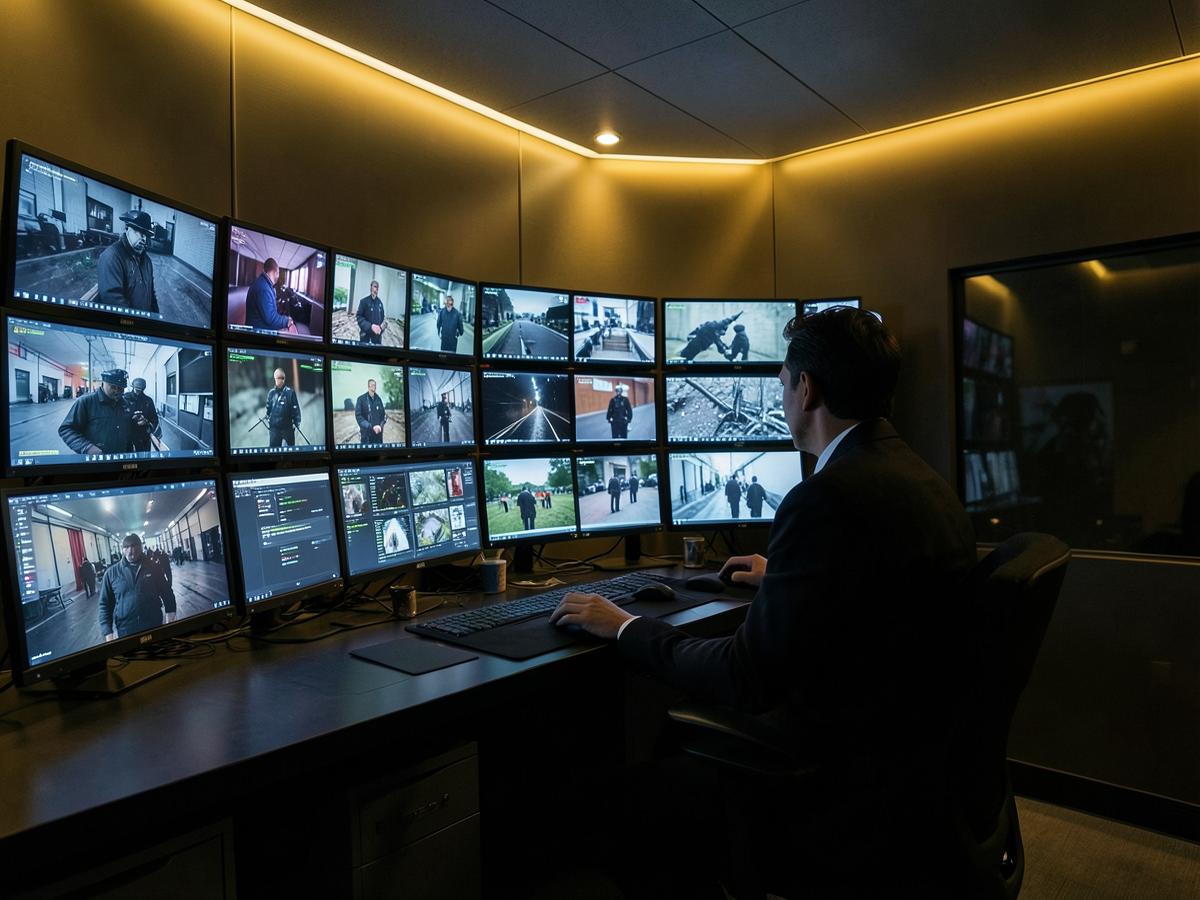
Electronic Surveillance & Vigilance
Key Takeaway
"Electronic eyes are only as effective as the guards monitoring them; round-the-clock control room discipline and rapid physical response prevent breaches before they escalate."
Cameras alone don't stop intrusions — responsive human monitoring does. Learn how combining electronic surveillance with disciplined physical patrols creates an airtight security perimeter.
1. Overcoming Screen Fatigue with Shift Rotation
Studies demonstrate that after 20 minutes of continuous screen watching, operator attentiveness drops significantly. Effective control room management mandates scheduled screen rotations with active perimeter patrol checks.
Our operators follow structured monitoring routines: focusing systematically on perimeter blind spots, server rooms, parking basements, and entry turnstiles.
2. The Critical Link: Control Room to Ground Guard Intercom
Catching suspicious activity on camera is futile if the field guard takes 10 minutes to be notified. A direct, tested two-way communication channel between monitoring desks and roving guards ensures immediate intervention.
- Immediate escalation protocols for perimeter boundary tampering
- Recorded video log management for audit and police assistance
- Real-time coordination during fire alarms or power outages
3. Night Patrol Checkpoint Registers
Perimeter patrolling must never be random. Guard routes should cover stairwells, transformer yards, DG sets, rooftop access gates, and warehouse loading docks at randomized intervals to deter observation by trespassers.